
How Much Alcohol Is Too Much? A Kelowna Naturopath's Guide to Reducing Alcohol Consumption
What the latest research says about alcohol and health. How much alcohol is considered low risk. What a standard drink actually looks like. Controlled drinking versus abstinence. When to seek professional support.
Dr. Ali McMillan ND
6/10/20265 min read
In this article:
What the latest research says about alcohol and health
How much alcohol is considered low risk
What a standard drink actually looks like
Controlled drinking versus abstinence
When to seek professional support
It did not take me long to learn that wine was a big part of the culture in Kelowna. We are, after all, surrounded by wineries. It seems like most events included wine in some capacity, and there was a general expectation that everyone needed a glass in hand at all times. And if your glass began to empty a little, there was someone ready to top you up.
Keeping track of your consumption in these instances can be a challenge. Over time, our perception of what “a drink” is tends to change. But as I hinted in my marketing materials, there is a threshold at which alcohol becomes quite damaging to our bodies and future health. While no alcohol is good for you, the risk jumps at about 100 grams of alcohol per week on average.
The Medical Perspective on Drinking Has Changed
For a long time, it was the opinion of established medicine that some alcohol was actually good for you. They recommended a maximum of 10 drinks a week for women and 14 for men. When I was in school, I remember being shown studies indicating that a small amount of alcohol reduced the risk of alzheimers disease. We were taught that the Mediterranean Diet included wine, which would improve patient buy-in, and the antioxidants in the wine improved health. Years later, it would come out that these assertions were wrong.
The studies back then lumped non-drinkers into the "less than 10 drinks per week" group, so the benefits of having smaller amounts of alcohol were only showing up because the people who abstained were much healthier than everyone else. When they removed the abstinent people from the low alcohol groups, all the benefits of "some alcohol" disappeared with them in most reviewed studies.
New research has shown us that over 100 grams of alcohol per week has a dramatic rise in all-cause mortality. The old guideline of 10/14 drinks per week no longer makes sense because it was well over the 100-gram threshold.
We also know that when people drink, they usually drink more than a standard drink but count it as just one drink. So people often think they are only drinking 10 or 14 drinks in a week, but they may have been consuming a lot more than that, putting them in the high-risk drinking category.
We know now that this guideline was causing patients harm.
Today, we understand that no alcohol is healthier than consuming low amounts of alcohol. Even under the 100-gram-per-week threshold puts you at a higher risk of developing multiple cancers. We know that alcohol consumption contributes greatly to weight gain and fatigue by disrupting the sleep cycle, even if you don’t have trouble falling asleep, and increasing caloric intake due to the drinks themselves or the lack of sleep. We also know people are terrible estimators and frequently underestimate their alcohol consumption. Let’s change that right now…
How Much Alcohol Is Too Much
While any alcohol increases your risk of all-cause mortality over time, consuming over 100 grams of alcohol per week is where the real damage sets in. 100 grams of alcohol per week is about 7 standard drinks per week, or 1 standard drink per day. If you can limit your consumption to 7 per week, it would effectively put you into the lower-risk category.
Counting your drinks on a physical calendar or an app will help you stay within your 7/week limit. These are 7 standard drinks. A standard drink contains 14 grams of alcohol. A giant goblet of wine from a restaurant could be 1.9 standard drinks. We need to count drinks accurately to keep you in the low-risk group.
A standard drink looks like the following...
A 12-ounce can of regular beer at 5% alcohol by volume
A 5-ounce glass of wine at 12% alcohol by volume
A 1.5-ounce shot glass of distilled spirits at 40% alcohol by volume
Other drink types can be calculated using the University of Victoria Standard Drink Calculator.
Drinks should be measured. Remember, most people are bad at guessing volume without measuring it.
Controlled Drinking Vs Abstinence
A lot of people who drink alcohol and would like to reduce their consumption fail to get help because they fear there will be pressure to abstain completely. Controlled drinking is a more achievable goal for many.
Yes, there is a substantial benefit to your health if you stop drinking completely, but also if you reduce your alcohol consumption to a more controlled level (one or less per day), you are still reducing a lot of risk. Let’s not let perfection be the enemy of good.
Abstinence is absolutely the right call for some. There are other rules and guidelines that really resonate with others, like the 1,2,3 Rule or the No Weekday Drinking Rule. The path you take and the rules you choose to follow need to work for you.
When To Seek More Help
Most people will not need medical support to lower their alcohol consumption. Simply knowing alcohol is carcinogenic and counting their drinks will typically result in fewer drinks consumed. If you are in this camp, that is great news.
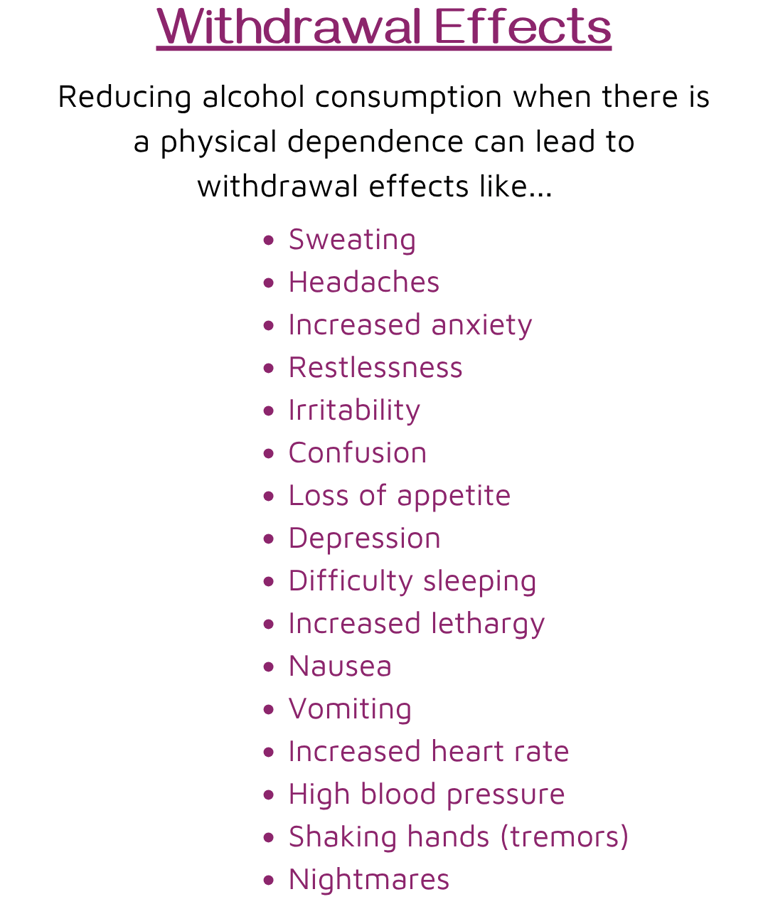
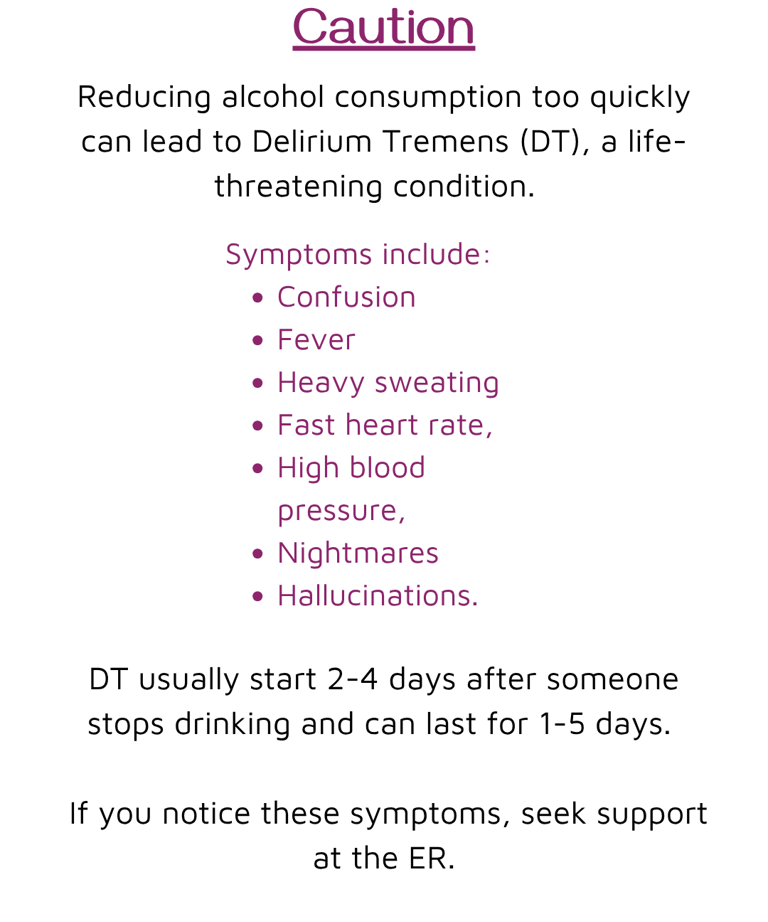
Now, if you currently have a physical dependence on alcohol, quitting, especially abruptly, can be dangerous. A gentle reduction is a lot safer, but any reduction should be monitored by a doctor. If you experience withdrawal symptoms when you attempt to decrease your alcohol consumption, you likely have a physical dependence. You should get support. I typically calculate a safe reduction plan for my patients to avoid withdrawal effects as best we can. Your family doctor could likely do this for you too.
My Approach
If you try to reduce your consumption and hit roadblocks, there is help available to you. I love helping people reduce their alcohol consumption and you are welcome to book an appointment with me. My approach involves assessing where you are at, not just regarding alcohol consumption but also your willingness to take on this challenge, stress levels, overall health and capacity for immediate change. Judgement and guilt are not part of your treatment plan. We move forward according to your needs.
I will often order a liver and cholesterol panel for patients who have been consuming a lot of alcohol so we can see where the liver is at and fix any potential damage. The liver is an amazing organ with great healing capacity. Unfortunately, there is no private imaging in Kelowna so I cannot order imaging of the liver, but if your labs are off, your family doctor (if you have one) will likely help. After assessment, I will put together your plan and send it to you. We usually meet about a month later to see what is working for you and change what isn’t.
Some people benefit from prescription drugs to reduce alcohol cravings. If you feel you need a bit of pharmacological help, we can discuss the options, and if safe and reasonable, I can write you a script. Your family doctor can also do this for you, but can prescribe drugs that manage the withdrawal effects as well, which are unfortunately out of my scope of practice.
My gentle approach is not sufficient for people with extreme alcohol use disorders. Inpatient options are absolutely vital for some people, and what I offer is not a replacement for those programs.
© 2025. All rights reserved.
Disclaimer: All content on this website is for informational purposes only, does not constitute medical advice, and does not establish any kind of patient-doctor relationship by your use of this website. A patient-doctor relationship is only established after we have expressly entered into a written agreement with you that you have signed the consent forms, including our fee structure and other terms to represent you in a specific matter. Although we strive to provide information that is accurate, the information presented here in not a substitute for any kind of professional advice and you should not rely sole on this information or expect it to apply to your specific situation. Always consult a qualified professional for your particular needs.